Nutrigenomics: Why One-Size-Fits-All Nutrition Does Not Work

This is a subject I find absolutely fascinating - and I’ll be honest, keeping this blog post short was always going to be a challenge.

After studying genetics as part of my postgraduate degree, and learning about the profound impact an individual’s environment (epigenetics) and dietary intake can have on the expression and function of genes within the body, I was completely hooked. One of the key concepts that sparked this interest was the study of single-nucleotide polymorphisms (commonly referred to as SNPs, pronounced “snips”). SNPs are variations at a single point in a DNA sequence, where one of the building blocks of DNA - a nucleotide - differs. They are the most common form of genetic variation in humans.
Nutrigenetics explores how these genetic variations may influence the way our bodies absorb, convert, or utilise nutrients. After graduating, I continued my training with Lifecode GX, completing their Certified Nutrigenomic Practitioner Programme, and then further qualifying as a BANT Nutrigenomics Counsellor.
So, what is nutrigenomics?
Nutrigenomics is the study of how nutrients - such as vitamins and minerals - interact with our genes, potentially influencing gene expression and, in turn, our health. Many nutrients, including vitamin B12, folate, and iron, act as co-factors, supporting optimal gene function.
By understanding an individual’s unique genetic blueprint, we can begin to explore potential root causes of symptoms and areas of biological imbalance. This deeper insight helps individuals better understand their own bodies - why they may be feeling a certain way - and often provides powerful motivation to implement recommended dietary and lifestyle changes.
How understanding my own genetic blueprint has helped me
Learning about my own genetics has played a meaningful role in my personal health journey, particularly in relation to Rheumatoid Arthritis (RA) and my menopause transition.
For example, I have genetic SNPs that may impact the function of my vitamin D receptors (VDRs), effectively downregulating their activity and reducing sensitivity to vitamin D. Vitamin D receptors are proteins found in most cells and are essential for vitamin D to carry out its functions. I often describe them as a “receiving antenna” - or a lock - into which vitamin D, the “key,” must fit.
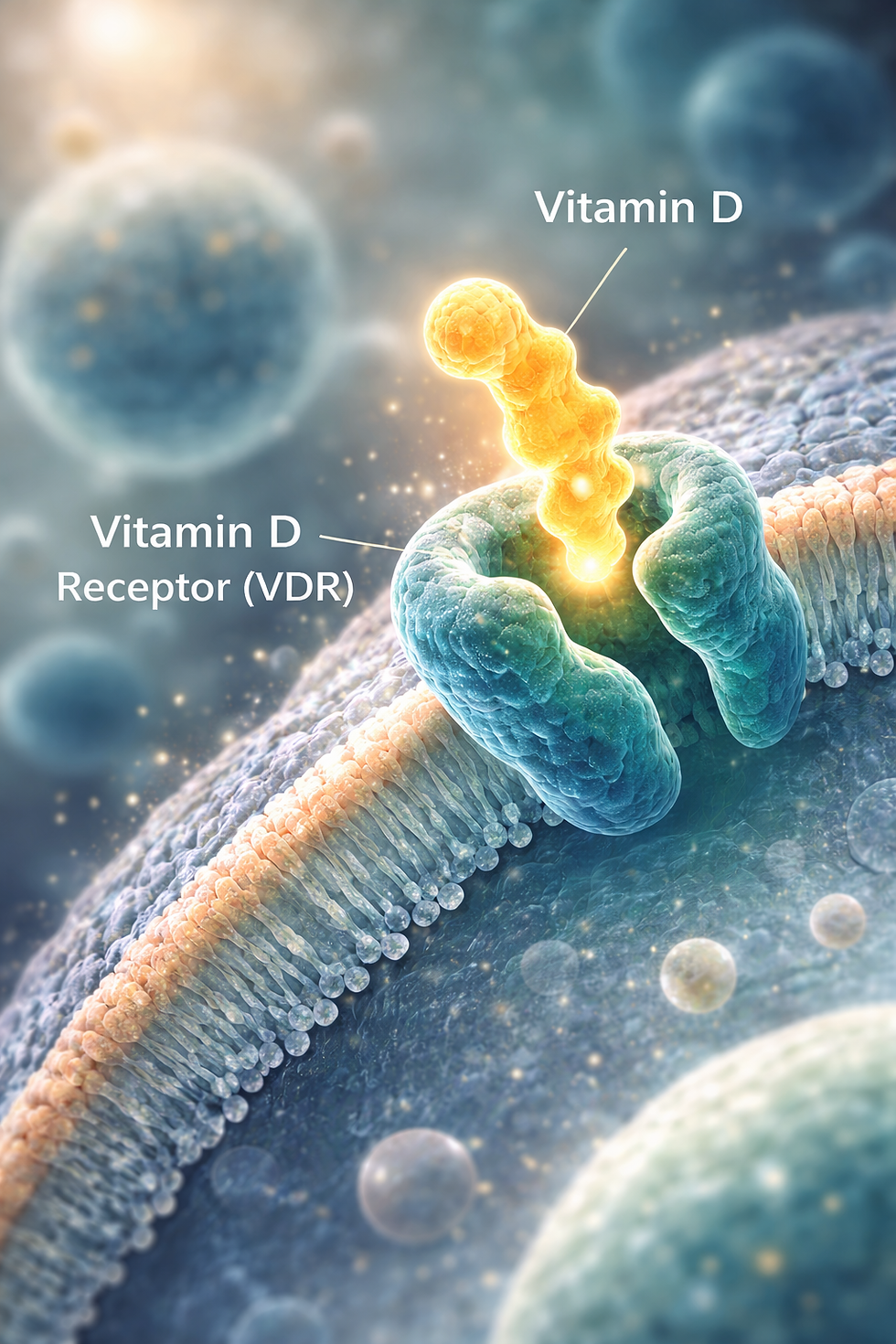
Vitamin D travels through the bloodstream to target cells. When it binds effectively to the VDR, the receptor changes shape and signals to other proteins within the cell, switching specific genes on or off. These genes provide the instructions that allow the cell to perform essential functions. Without effective receptor activity, vitamin D cannot communicate its message.
Vitamin D is vital for regulating calcium and phosphate - both essential for healthy bones, teeth, and muscles. It also plays a role in immune regulation, neurological function, and cardiovascular health. In my case, RA is associated with immune dysregulation, while the menopause transition - with declining oestrogen levels - is linked to increased inflammation. Both RA and menopause are also associated with a higher risk of osteoporosis, a condition characterised by reduced bone density and increased fracture risk.
My genetic results helped me understand that my “key” may not fit the “lock” as efficiently as it does for others. This means I may require higher vitamin D intake than the average healthy individual. Due to photosensitivity linked to RA medication, my sun exposure is limited, reducing my ability to synthesise vitamin D naturally. As a result, I supplement vitamin D daily, year-round, aiming to maintain slightly higher blood levels to increase the likelihood of effective receptor activation. Importantly, all adjustments were made within safety guidelines and with the support of my Rheumatologist. And since optimising my vitamin D status, I have personally noticed improvements in my RA symptoms - an example of how personalised insight can translate into meaningful change.
Bringing this into clinical practice
This is just one of many insights nutrigenomic testing can provide. In clinic, I love helping clients understand how their symptoms may be influenced by their underlying genetics - whether that’s how they create, convert, and clear sex hormones (such as oestrogen and progesterone), produce neurotransmitters (including serotonin and dopamine), regulate blood sugar, appetite, and weight, or manage sleep and oestrogen detoxification.
With this deeper understanding of how your body functions, nutritional and lifestyle guidance becomes even more personalised. For many clients, this insight is incredibly empowering, providing clarity, validation, and motivation to support sustainable change and long-term habit formation.
I often find myself wishing I had access to this information in my late teens or early twenties, so I could have supported my body more effectively along the way. But it’s never too late to learn - and I’m grateful to be using this knowledge to support my health, resilience, and longevity as I age.
Interested in learning more?
If you’re curious about your own genetic blueprint and how nutrition may support your unique biology and overall health, then book a free, no-obligation call via the link below. We can explore whether nutrigenomic testing might be appropriate for you.
A note about Lifecode GX
Unlike many genetic testing companies, Lifecode GX focus solely on SNPs with a strong and well-established scientific evidence base. The test is simple and can be completed at home using a painless cheek swab. Client details are not shared with the testing laboratory, and samples are destroyed after six months. This allows additional tests to be run within that period, if needed, without requiring a new sample. Testing information was accurate at the time of publication.


Comments